


March is one of the most popular months for cruising the Gulf of Mexico and the Caribbean—and for good reason. It sits right at the sweet spot between winter cold fronts and the start of the wetter summer pattern. For cruisers, that means comfortable temperatures, manageable seas, and very low risk of tropical weather.
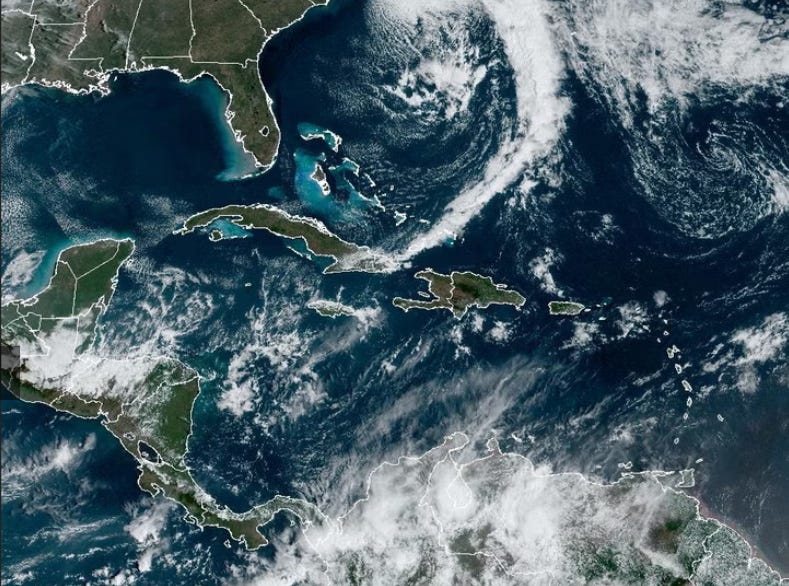
Whether you’re island-hopping in the Eastern Caribbean or crossing the Gulf toward Florida, here’s what March typically delivers.
Why March Is a Favorite for Cruisers
Across much of the Caribbean, March marks the tail end of the dry season. Rainfall is low, humidity is comfortable, and sunshine dominates most days—ideal conditions for shore excursions, beach days, and open-air dining on deck.
Daytime temperatures generally range from the mid-70s to upper-80s°F (26–31°C), while nighttime lows fall into the upper-60s to upper-70s°F (19–26°C). Monthly rainfall is usually under 2 inches, and when showers do occur, they tend to be brief and localized rather than day-long washouts.
Consistent trade winds keep the air moving, preventing conditions from feeling stagnant and helping moderate the heat—especially welcome during longer days at sea.
March Weather Conditions in the Gulf of Mexico
Winds
In March, Gulf winds are generally variable but most often easterly to southeasterly, averaging Beaufort Force 4 (11–16 knots). Conditions become a bit livelier in the northwestern Gulf, where Force 4–5 winds (11–21 knots) are more common.
The chance of encountering gale-force winds (34 knots or higher) remains very low—around 1% across the northern Gulf and 1–2% in the westernmost Gulf—but passing frontal systems can still temporarily increase winds, particularly early in the month.
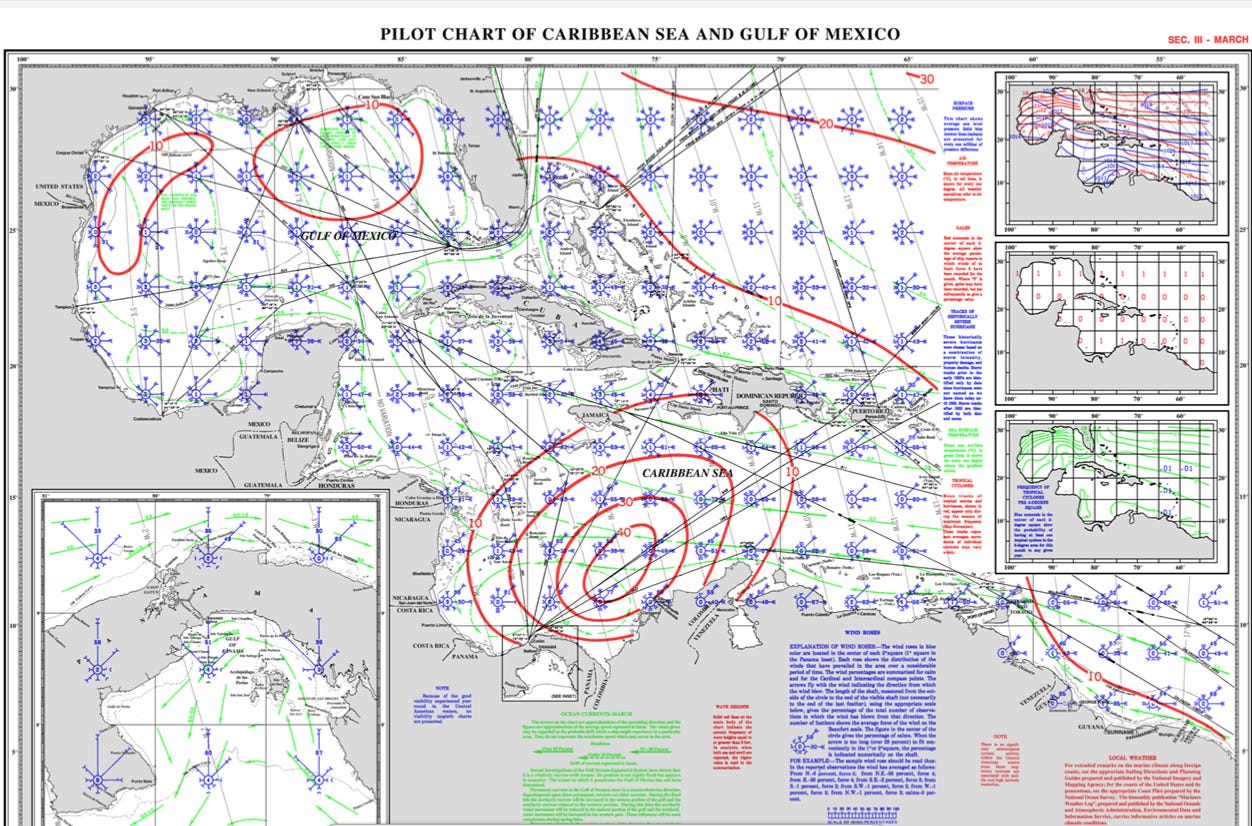
NOAA Atlast of Pilot Charts
Seas
Most cruisers can expect sea heights of 2–5 feet (0.7–1.5 meters) across much of the Gulf. The northwestern Gulf occasionally sees 5–8 foot seas (1.5–2.4 meters), especially following cold fronts.
There’s about a 10% chance of encountering seas over 8 feet (2.4 meters), mainly in the northern Gulf, so it’s wise to stay weather-aware if your route takes you through that area.
Sea Surface Temperatures
Water temperatures show a noticeable gradient:
18–19°C (64–66°F) in the extreme northwest near the Texas coast
Warming steadily to 24–25°C (75–77°F) near the Florida Straits and the north coast of Cuba
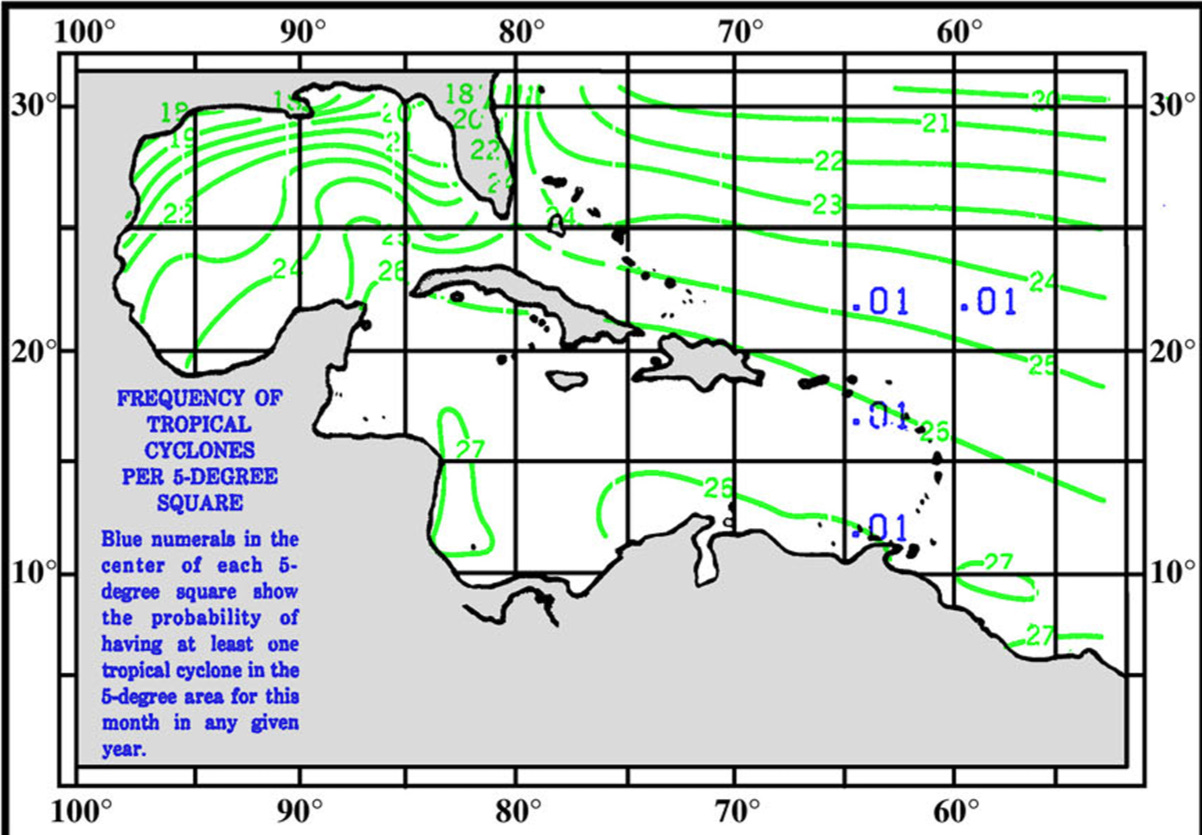
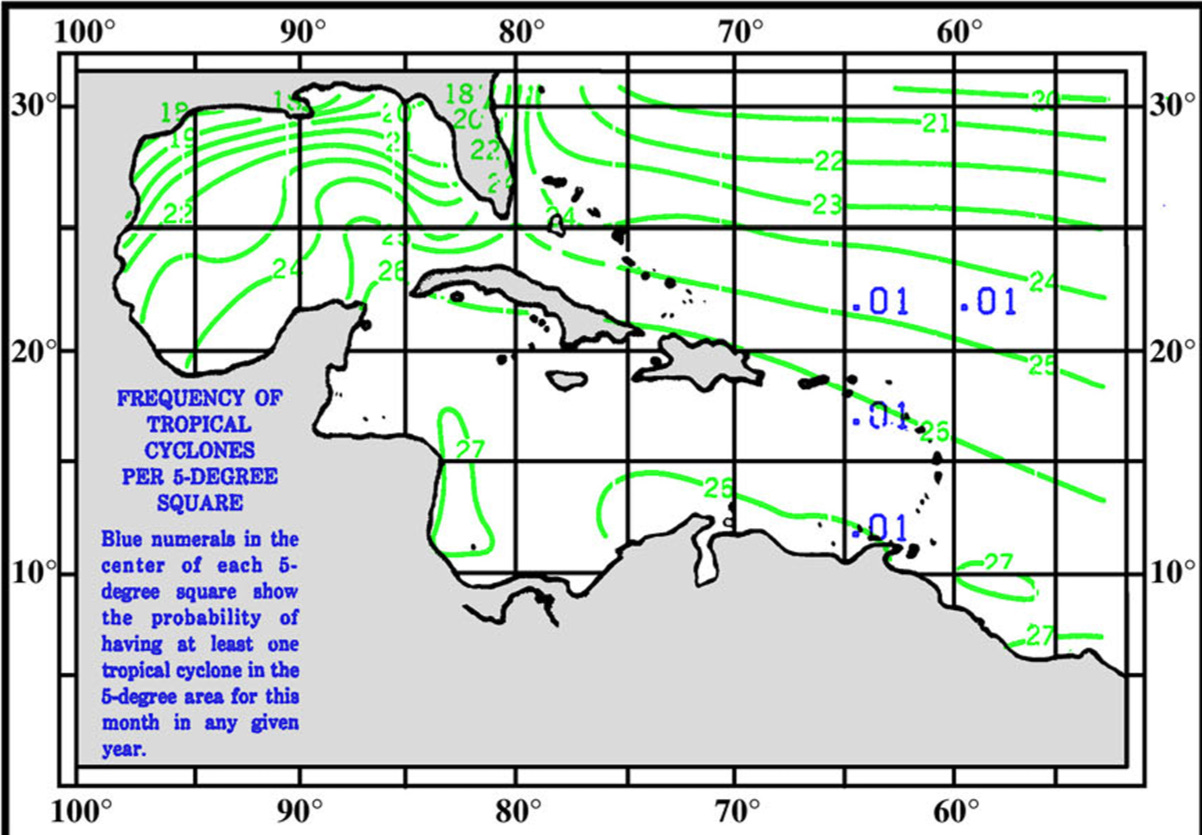
Swimmers may find the western Gulf brisk, while waters near Florida and Cuba feel far more inviting.
March Weather Conditions in the Caribbean
Winds
March brings reliable trade winds across the Caribbean. Expect easterly to northeasterly winds averaging Beaufort Force 4 (11–16 knots) for most areas.
The south-central Caribbean—including waters off Colombia—often experiences stronger conditions, with Beaufort Force 5 winds (17–21 knots) being common. Gale-force winds are rare, with less than a 1% chance overall, increasing slightly to around 1% in the south-central Caribbean.
Seas
Sea conditions mirror the wind pattern:
2–5 feet (0.7–1.5 meters) across much of the Caribbean
5–8 feet (1.5–2.4 meters) in the south-central Caribbean
The risk of encountering 8-foot or higher seas:
Less than 10% in the Northwestern and Eastern Caribbean
10% to over 40% in the Central Caribbean, with the highest risk offshore of Colombia
This makes route planning especially important for smaller vessels or those prone to motion discomfort.
Sea Surface Temperatures
Caribbean waters are comfortably warm in March, typically ranging from 25–28°C (77–82°F)—excellent for swimming, snorkeling, and diving without the need for heavy thermal protection.
Tropical Cyclone Risk: Essentially None
March is well outside hurricane season. The risk of encountering tropical cyclones is near zero throughout the Gulf and Caribbean, with only a very small (about 1%) chance in the far eastern Caribbean. This low risk is a major reason March remains one of the most reliable cruising months of the year.
Bottom Line for March Cruisers
March delivers:
Pleasant temperatures
Low humidity and rainfall
Manageable winds and seas
Virtually no tropical cyclone risk
Whether you’re cruising for leisure, repositioning a vessel, or planning longer passages, March offers some of the most dependable weather of the year in both the Gulf of Mexico and the Caribbean Sea—making it a near-perfect month to be on the water.